Wednesday, August 24, 2011

AFHSC and serum repository

Yesterday we had a tour of the Armed Forces Health Surveillance Center (AFHSC) and the serum repository. The serum repository is the largest one in the world, containing almost 60 million blood samples, the blood that's left over every time the DoD draws blood for a routine HIV test. So three of those samples in the repository are from me.

They have all sorts of fun toys in there, to make dealing with that many blood samples manageable, including one that pipettes blood into vials and unscrews tube tops. Here's a video, if you want to watch how it works:


And in case you can't visualize 60 million blood samples, here's the view in one of 7 freezers (at -30 degrees C), each of which is about 7000 square feet.


And down the aisle:


After the tour of the serum repository, we had a three hour epidemiology review, which was all sorts of fun (not really). That's what we were doing when the earthquake happened. Unfortunately, it only rescued us from about two minutes of reviewing (enough time to leave the conference room, confirm that the world wasn't coming to an end, and return). Here's what the white board looked like at one point:


I start at AFHSC full-time on Monday (hopefully without the epidemiology reviews). While there, I'll do a surveillance project on a disease of military interest. My surgeon friends tell me that they're seeing a lot of war-wounded patients with invasive fungal infections of the wounds, and for some reason, the patients at Walter Reed do worse than the patients at Bethesda, even though Bethesda gets more patients with this type of infection. I'm hoping to do an analysis of how patients do based on which service (Army, Navy, Marine Corps, Air Force) and where in Afghanistan the patients were when wounded. We'll see if that's deemed a good project or not.

Tuesday, August 23, 2011

Goodbye, Kenya

 I've been back from Kenya for a few days now, procrastinating about posting my last few pictures onto the blog. The last couple of days in Malindi were pretty low-key. On Thursday, we took the German medical students out to lunch at the Hilton. The one on the right, Maria (who is actually Norwegian, but goes to school in Germany), ran the 5K as part of the marathon on Saturday (day after I left) and placed third for women. Apparently, there was a girl about 10 years old who showed up for that run in ballet slippers. Dr. Childs told Maria she had to beat the girl, and she did--just barely. Even Kenyan children are good runners.


The girls were quite a hit with the children at the Hilton.

Here's a random picture of the waiting area of the outpatient clinics at the hospital:


Friday I packed up my belongings (which reminds me... I still need to fumigate my duffle bag, my laundry smelled that bad) and attempted to check out of the hotel, but they told me that their credit card machine was down (whether it was or not, I don't know), so they told me to go to the ATM. Well, my government credit card only lets me pull $600/month out in cash, which wouldn't cover the 95000 KSH hotel bill (about $1000), and the ATM that took my personal debit card wasn't working, so I had to take my personal credit card to the bank with my passport to pull the cash out. Long and frustrating story short, two hours later I had the cash to check out of the hotel, and then it was time to head to the airport.


This was the plane that carried me from Malindi to Nairobi, the first of four flights until I landed at Reagan. I had a very long layover in Nairobi (almost eight hours), so I spent some of that time in one of COL Coldren's favorite bars, The Pub (it's at the airport). He discovered that bar when he was in Kenya as a preventive medicine resident and had a long lay-over in Nairobi, so I kept alive the tradition of preventive medicine residents working on data at The Pub while waiting for the next flight.

After Nairobi was Amsterdam, then Detroit (where I again confirmed that the entire state of Michigan is worthless... no USO, no free wifi, and bad cell phone reception in the airport), and then it was back to DCA. I had from Saturday afternoon until Monday morning to recover, and then it was into WRAIR at 7:30 to officially begin my third year of residency. I have a week of in-processing and administrative stuff, and then begin at the Armed Forces Health Surveillance Center (AFHSC) next Monday.

Wednesday, August 17, 2011

Slaughterhouse and spraying

I said I was doing things by alliteration, so today I had to visit the slaughterhouse and then spray for bugs. It only makes sense.

My day got a very early start this morning... 0100, to be exactly, when my alarm went off, telling me to get out of bed and get dressed to visit the slaughterhouse for a meat inspection. We arrived around 0130, and then the veterinarian and public health officer showed us around the place, to the lariage, where the animals are waiting to be taken toward the slaughter, and then to the stunning pen, where they shoot them with a bolt gun prior to slaughter. Once stunned, the necks are cut for slaughter, and after they've stopped thrashing around, the heads and hooves are removed, and then they're ready to go.


This is what the slaughterhouse looks like when they're almost done with the slaughter. They usually do between 20-30 cattle a night, and because everything's done by hand, they wait until they've slaughtered all of them before moving on to the next step. They slaughter goats and sheep here, too, but we only saw the cattle slaughter (no pigs; that's against Muslim regulations, to slaughter them at the same facility. I don't know where they slaughter pigs around here, but they do have pork, so it must be somewhere).


This was the part that was most impressive to me, how quickly they got that hide off the cow. Everything's done by hand, and it was less than five minutes of skinning, and it was done perfectly. No meat on the hide, no holes, just one big piece of cow hide. They remove the gastrointestinal tract and reproductive tract at this step, too.

Unfortunately, I was apparently not supposed to be taking pictures, so I don't have any pictures of the actual meat inspection, which is what I was there for. They inspect the head and the carcass separately (since the head had been removed already). They're supposedly arranged so head 1 belongs to carcass 1, which matches with hide 1 and intestines 1 and hooves 1, but the vet says that there's often quite a lot of mix-up.

For both the head and the carcass, there are three main steps: visualization, palpation, and incision. For the head, that's visual inspection to make sure there's no bleeding or bruising and everything looks symmetric. Then the muscles, tongue, and lymph nodes are palpated. Finally, the tongue and masseter muscles (open and close the jaw) are incised, to look for cysts (parasites) and abscesses (bacteria). None of the heads had anything wrong with them.

Next is the inspection of the carcass, and before, it's visualization, palpation, and incision. Again, what they're looking for is signs of bruising, bleeding, signs that good with poor bleeding of the animal during slaughter, and infection, with either parasites or bacteria. The kidneys, liver, lungs, and hind leg are all incised. In the liver, they're looking for liver flukes (which aren't found much in this part of Kenya, due to the proximity of salt water; liver flukes like fresh water) and echinococcus, another parasite. They also look for echinococcus in the lungs, and in the actual meat, they're looking for tapeworm cysts. The animals we inspected all passed.

So after getting a little bit more sleep, I was back in the hospital and back in the public health department. There were reports of cockroaches in the newborn unit (which we verified). Cockroaches themselves aren't vectors, but can carry bacteria on their legs. Besides, they're gross, and where there are cockroaches, other bugs will follow. Since we didn't want to be spraying preemies and otherwise sick babies with insecticides, we had to have them remove all babies (and most of the stuff) from the unit before we could begin, and then stay outside for another four hours. All sorts of fun. Unfortunately, it wasn't possible to move everyone out of the maternity building (where the newborn unit), so we couldn't spray the whole building. The spraying remains in the room for several months, but the rest of the building will probably soon have a bug problem. Oh, well. Maybe then they'll consider moving their patients.


Tomorrow is my official last day in the hospital, but I probably won't do much, and I definitely won't stay past lunch (I'll probably leave much before that). There are still a few more things I need to buy for people, and I'm down to only coins, so I hope the ATMs are more cooperative tomorrow morning than they were this afternoon (the one ATM that took MasterCard decided that it doesn't like MasterCard, and my back-up ATM card is my government credit card for travel, which was maxed out on cash withdrawals, but is being paid today).

Almost home!

Tuesday, August 16, 2011

Gongoni and Mambrui

Today I got to see where Malindi District Hospital incinerates its waste, since their waste incinerator was vandalized and is non-operational. There are two facilities with identical incinerators (more of the work of the United States Marine Corps) about 15 kilometers up the road toward Lamu, Gongoni and Mambrui. We took the waste to Gongoni today (they alternate between the two).

Here's a picture of the incinerator, which they use to incinerate sharps waste (glass bottles, needles, etc):


The incinerator was built in May 2010, when the Marine Corps essentially went down the coast of Kenya and built one for every hospital and clinic, but as you can see in the picture, the concrete can't hold up to the heat of the incinerator. It's still operational, but I can't help but wonder how much longer it will be so. I wonder who I should contact from the Marines to inform them of this problem, so they can improve on the design in the future.


Unfortunately, the incinerator is only for sharps containers. The rest of the infectious waste produced at the hospital is incinerated in the incredibly high-tech incinerator pictured above: a hole in the ground. Obviously, this is not an ideal situation for anyone (it can't reach the heat necessary for proper incineration and to prevent the formation of dioxins, which are carcinogenic), but as far as I know, nobody's doing anything to rectify the situation.

The new "incinerator" that will be going in at Malindi isn't actually an incinerator at all, but an autoclave, followed by a grinder. This will sterilize all infectious wastes (sharps and non-sharps) and then grind it to a course powder for disposal. Since nothing is burning, there's no smoke, so no concerns of carcinogens, which means that it doesn't have to be set away from where people live/work/play/etc, which is what the WHO recommends (I think the distance is 50-150 meters, depending on the climate conditions of the area).


This is Mambrui Dispensary, which is the other site they use for incineration. We didn't burn anything there today (I'm really not sure why we made that side trip, actually). Just a little bit about the different terms: there are six levels of government health care in Kenya. Level 1 is the community health workers. Level 2 is the dispensaries, which have a head nursing officer (I don't think they have a clinical officer), delivery room, maybe one or two rooms for inpatient care, and a consultation room. They have a pharmacy and vaccine clinic as well, but the only vaccines they do are the routine pediatric vaccines. Level 3 is a health clinic (such as Gongoni), which has at least one clinical officer, more inpatient wards, etc, etc. Levels 1-3 are run by the Ministry of Public Health and Sanitation. Levels 4-6 are run by the Ministry of Health, and these are the hospitals of increasing size (district, provincial, and national). So, Malindi District Hospital is a level 4 facility, and the dispensaries and health clinics in the district fall under it, even though they're run by two different ministries of the government. Confused yet?

Random picture of the day: Salt farm. Yes, they farm salt here.


Sunday and Monday

I realized last night as I was in bed that I didn't write an entry. Oops.

Not much exciting happened on Sunday. I woke up, went running at the gym (where it was already hot and humid despite showing up when the gym opened at 7), and then lounged around the hotel until it was time to do some souvenir shopping. I went to the tourist market (yes, it's called the tourist market), and had the 'help' of a local, which mostly meant he shooed me past shops until we got to ones that belonged to his friends who would offer me 'good prices'. Whatever. All the shops had pretty much the same stuff, so I wasn't missing anything.

Random shot of children near the tourist market:


Yesterday the Casualty department (like an emergency department) opened for business. Well, it opened; I don't know if they got any business yesterday. When I was there in the morning, the nurses were doing inventory and making sure all the keys to all the rooms worked (they didn't). Here's what the resuscitation room looks like:


Not a bad facility, all things considered. They have one portable x-ray, a portable ultrasound, monitors for vital signs, and a defibrillator (which nobody knows how to use). It's too bad I'll be leaving in a few days; it would be interesting to see how works with patients.


That's me and Katana, the public health officer. Yes, it's centered funny because I'm not very good at using the timer on my camera.

After opening the Casualty department and doing the walk-through, I was surprised by the next assignment: to teach a group of secondary school students the basics of HIV/AIDS. I was told that this is what we were going to be doing about five minutes before we headed over there to do it. I'm not sure exactly what the students are being trained for, but it's a week-long course over HIV/AIDS, either to be peer educators at their schools or to do VCT (voluntary counseling and testing).

So we went over there, and after the standard couple of hours of introductions, ice breakers, and the students going over their expectations of the course (all of which was in English, out of consideration for me... makes me feel a bit ignorant, that these kids know at least three languages fluently, and I only know one), it was my turn. Since they're going to have a lot of sessions about some of the nitty-gritty details, I just wanted to go over the basics, so I started asking what they knew about HIV/AIDS. Some of them had a fairly broad base of knowledge, others not so much. Here was the list they came up with:

-HIV stands for Human Immunodeficiency Virus
-There is no cure for HIV
-HIV causes AIDS
-HIV can be prevented
-You can't tell if someone has HIV just by looking at them

We then went through how HIV is transmitted, which turned into a session about facts and myths of HIV transmission. Some myths I had to dispel include that you can get HIV through a person's sweat or sharing a toothbrush. They also had questions about a few things I didn't know about, such as whether HIV can be transmitted by traditional circumcisions or wife inheritance, so they had to explain those to me. In traditional circumcision, you'd have a group of boys or girls (yes, there are places in Kenya where they do female circumcision) and they'd all get circumcised at the same time, one after the other, with the same tools. I said that that would be possible to transmit HIV in that case, but apparently the Ministry of Public Health and Sanitation beat me to that: they've done quite a lot of teaching to the villages on this, and now most will sterilize the instruments in the fire between 'patients' or use new ones with each circumcision. Good to know.

Wife inheritance is that when a husband dies, the brother inherits the wife to take care of, and often that inheritance includes expectations that she would perform all wifely duties. Obviously, if the husband had died of AIDS, that's not going to be a good thing. So I said yes, HIV can be transmitted that way, which is why it's important to educate people that you should always know a person's HIV status before having sex with them, even if it is a new spouse. Obviously, empowerment of the women to be able to say no to having a new husband would be the ideal situation, but baby steps.

In all, despite the zero prep time, it went pretty well. The students seemed to follow what I was saying and had good questions, so I'm sure the rest of their week will go well. I just don't know what role I have in the rest of that week.

Saturday, August 13, 2011

Scuba and snakes

I've decided to do the rest of my experiences in Kenya by alliteration. Today is scuba and snakes, tomorrow will be running and...rest? Rum? Rainbows? Just kidding, even though my two experiences today really were scuba diving and seeing a snake farm.

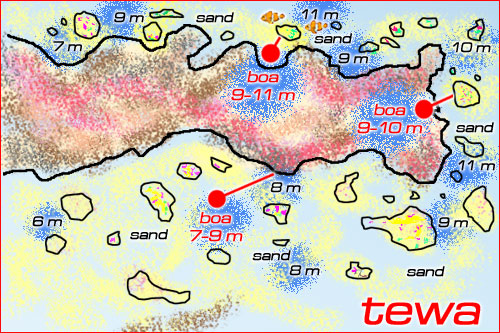
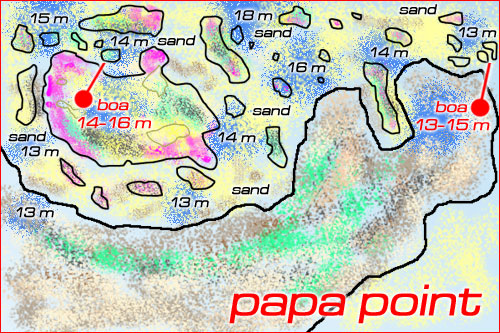
I went diving out of Malindi Marine Park this morning with Blue Fin Diving on two sites, Tewa and Papa. The website even provides maps of the dive sites:


They were pretty good dives with reasonably good visibility and a lot of fish and octopi to see (and, at Papa, a large turtle). It was a pretty large group I went diving with (and all Italian...), but they had a lot of dive masters and split us up into small groups, so it was manageable.

After I was done diving, I went out to Watamu to meet up with Dr. Childs for lunch and to head out to Bio-Ken snake farm. But first we had lunch at Ocean Sports Resort, where we had to put up with terrible views like this:


Bio-Ken (http://bio-ken.com/) is a snake farm and research center, with many different missions, including milking snakes for venom to be sent off to India and used to make anti-venoms. I was under the impression before I went that they make the anti-venoms there, but it's too large and expensive of a venture that involves, among other things, injecting horses with increasing amounts of venom until they make antibodies against it.


This is a green mamba, which is one of the most poisonous snakes in Kenya and one that they harvest the venom from. The distribution of the green mamba in Kenya is the light blue and yellow:
map

We're obviously in the yellow. There's a lot of other cool stuff on the website, if you're interested in learning about snakes and snakebites. Probably wouldn't be very helpful with American snake bites, though (other than the general info on taking care of snake bites: don't apply tourniquets, keep the patient calm, etc).

That was pretty much my day. Tomorrow I'm going to try to get some running in in the morning (before the gym gets ridiculously hot), and then we'll see what happens after that.

Friday, August 12, 2011

Medical examinations and the falconry

 Yesterday and today, I spent a good portion of the day doing medical examinations of the food handlers at two local resorts (Blu Key and Coral Key, owned by the same outfit). "Medical examination" is probably a bit generous of a term for what we did: we collected urine and stool samples and checked them for urinary tract infections and parasite infections, a process that every food handler goes through semi-annually to keep his or her food handler license. We did detect a few probable urinary tract infections (hard to be definitive when the only thing you're using is microscopy), but no parasite infections. I was quite surprised (and a little disappointed, to be honest) at the lack of parasites, until the public health officer I was working with informed me that food handlers are routinely dewormed. Here are a few things that we were looking for:

 Hookworm eggs

 Ascaris egg (roundworm)

 Schistosomiasis egg

Actually, we did a schistosome egg today, but that was in an unrelated patient. But yes, I did spend most of my afternoon dealing with shit. During spring quarter of my master's, I took a class on medical parasitology (worst class ever, by the way), and every Friday afternoon, when everyone just wanted to go home and take a nap, we had parasitology lab, which consisted of us looking at slides of stool samples, trying to find parasites. So every Friday during lunch, I ended online conversations with Brad by saying, "Well, time for me to look at shit under a microscope." It became a bit of a joke for everyone in the class.

But back to the story... everyone passed their "medical examinations" and got their certificates to continue working as food handlers for another six months, and I wrapped up another week of work at Malindi District Hospital (only one week to go until I'm heading home!) After finishing at the hospital (and Dr. Childs finishing his first class of almost-ATLS), we decided to hit the town. Nothing terribly exciting: we went to the Malindi Falconry, which is more of a zoo than just a Falconry. Here's some of what we saw:


Giant, ancient turtle (the guide said he was 118 years old). He liked to be petted, so I petted him for a bit (it's like a leathery dog), but apparently he took a liking to me and started following me around. I was a little weirded out, but not too worried. I'm pretty sure I can outrun him.


Monitor lizard.


Green mambas. These are very poisonous and are found in Kenya (along with black mambas and a couple of other venomous snakes)


And, of course, falcons, which we got to play with. Not really; we just got to hold them, but that was kinda fun, too.


Finally, we had dinner at the Malindi Sea Fishing Club, where they have displayed Kenya's first grander (fish weighing over 1000 pounds). This sailfish (swordfish to us Americans) weighed in at 1250 pounds. It's quite large. There was a cricket game on the television, which I still do not understand at all, despite the fact that we were there watching for an hour and a half.

Tomorrow begins the last weekend in Kenya, and I'm going to be starting it off with a nice and relaxing scuba dive off the Malindi Marine Park :)

Wednesday, August 10, 2011

Teaching and training

Today was more of the same, unfortunately (or fortunately, I haven't quite decided yet). I'm again in public health, so I spent time with Katana on his weekly disease surveillance reports, which have to be submitted up to the next level. He gets reports from the local clinics (35 or so of them, I think they said), and then puts that all together to submit up to the district public health officer, who submits them up to the province, then to Nairobi, etc. What he usually does is count them all up by hand and submit it that way, so I introduced him to Excel, which will do the summations and keeps everything in a pretty handy place for the future. I've never taught anyone how to use Excel before, so it was a little interesting to see all the things that I do without thinking (like making the columns fit the headings), from the point of view of someone who doesn't know much about the program. I did teach him the basics and how to do summations, but that was about it. I also had to teach him how to save websites into his favorites... The things we take for granted having grown up with computers, I guess.

After that, I got a call that there was a post-mortem (an autopsy) that was about to start, and since I was interested in that process, I went over to the morgue/funeral home for that. Sadly, it was an 11-year-old girl who had been hit by a bus. She was missing the back of her skull and almost all of her brain, so cause of death was pretty obvious, but they still did an internal examination to get a full list of injuries for the police report. One main difference between autopsies here and in the States is that in Malindi, they don't have trained pathologists, so they don't do histology (looking at tissues under a microscope). For cases such as this one, with obvious cause of death, looking at the tissues isn't really all that necessary anyway, but if there's a question of cause of death, or if there's something that needs to be looked at to determine if it's cancer, the tissues get sent down to Mombasa, about 3-4 hour drive down the coast. Not nearly as streamlined of a process as what I'm accustomed to.

Following that, I decided to check out how the trauma training was going. Dr. Childs was using ATLS presentations, which was good, in that they cover the standard of care for trauma treatment, but also a bit difficult, in that Malindi doesn't have a lot of the resources that are needed for standard of care. It's an interesting balance, to present what is right but at the same time teach them what to do in their situations. There's a group of German med students who are the hospital for a month who were also attending the training, so I got to chat with them for a few minutes about school and what they were hoping to accomplish on this rotation.

Tomorrow, I think I'm going with the district public health officer to inspect some of the clinics, but I haven't heard from Jeremy, so I don't know what time I'm supposed to be at the hospital to leave. This could be interesting...

Tuesday, August 9, 2011

Dog bites and exchange students

As with yesterday, I spent the day with the public health office. Unlike yesterday, instead of starting with active case detection (which is done on Mondays), today we seemed to be having a special on dog bites, and because this is the developing world and dogs aren't vaccinated against rabies, with dog bites come rabies vaccines (in the States, the most common exposure to rabies is in bats, but in the developing world, it's still dogs). With this patient, he had been bitten by his neighbor's dog yesterday, after the dog bit a goat. After the dog bit the patient, the owners killed it, which makes sense, except when you consider that you can test the dog for rabies to determine whether or not the person needs to be vaccinated.

Since we didn't have the dog to test, the default is that the patient gets rabies vaccine, which is not cheap. In most parts of the developing world, one course of shots (five shots) is about 5% of the average family's annual income--and about half of all people have had a course at one point in their lives. Fortunately, Malindi has a supply of vaccines, which is free (when the alternative to getting the vaccine is getting a disease that is 100% fatal, it's best not to bring finances into the equation). So I saw the patient, saw the bite (which had been cleaned at a local clinic yesterday) and decided that he needs shots, so I gave him the schedule for the shots (days 0, 3, 7, 14, and 28), wrote it out on a calendar with circles for the days he needs to return for the next shot, and set him up to get a tetanus vaccination as well (since he had no idea when his last tetanus shot was, if ever). We also recorded all his information for the Ministry of Public Health and Sanitation's records of where the vaccines were going to.

After all this, we headed to a meeting with the Wellcome Trust's chief engineer (Wellcome Trust is the organization we visited down in Kilifi) and their contractor, because they are building an extension of the CCC, to create a lab that they will use for clinical TB research. This is the part of public health that I'm definitely still learning. It's one thing to say, "Okay, we want to build a lab," but it's another entirely to draw up blueprints, go the site, evaluate the site, determine where the wiring and plumbing is, etc, etc. I'm glad there are people who know this stuff, because I don't.

For lunch I got to meet with a student from Jeremy's NGO, Aiducation International (http://www.aiducation.org/). It's an organization that, through donations, sends kids to secondary school (tuition for primary school, or 1-8, is covered by the government, but secondary school, 9-12, is not); as far as I'm concerned, educating kids does more for a country than all the shipments of medications ever could. Anyway, this student, Henry, recently returned from a year as an exchange student in Michigan, so it was fun talking to him about living in the States and being back to Kenya. Like any teenager, his favorite restaurant is Burger King, and his favorite thing about being in Michigan was playing and watching basketball. I think it was a good educational experience as well. He hopes to return to Michigan State University for college to study physics or engineering, and wants to be a pilot. Here's a picture of us outside the Hilton (a nickname, not the real name of the restaurant):


After lunch, I did my typical lounging around (went for a swim, read on my iPad, etc). I know, it's a difficult life I lead. Tomorrow I'm back in the public health office, to see what fun preventive medicine things we can find this time.

Monday, August 8, 2011

More training

This time, the training isn't for me. Yay!

I started the day in the public health office, where we did active surveillance for polio and measles. This involves going to the outpatient physiotherapy and occupational therapy logs, and checking the diagnoses to make sure nothing sounds like "acute flaccid paralysis" (which is polio), and then going to the pediatrics ward and making sure nothing looks like "fever and a rash" (which could be measles). It would also be possible for acute flaccid paralysis to be the inpatient peds ward, but we didn't see that (or fever and a rash). This is good, because with the two cases of neonatal tetanus from before, Malindi District Hospital already has enough to report to the WHO.

That didn't take too long, so I was off to do more preventive medicine-type things, which was seeing how their vaccination clinic worked and what exactly happened in the family planning clinic. The vaccination clinic was interesting, just because there's so much logistics that we don't usually think about. Cold chain is very important, especially for the measles vaccine; if the vial gets to warm, it's useless (and no, I don't know what that magic number is). So they have the stocks of the vaccines in a freezer, which is only opened twice a day, once in the morning to remove what would be needed for the day, and once the evening, to return anything that wasn't used. The vials that are going to outlying clinics were placed in a cooler and packed with freezer packs (the fake ice stuff usually used in coolers). Those that were going to the vaccination clinic at MDH were placed in a fridge in the clinic, except what they needed at the moment, which was kept in a cooler with the freezer packs. Whenever that cooler was emptied, they opened the freezer to get more. It was somewhat complicated, but it works, which is the most important part.

"Family planning" is the PC term for birth control. I haven't seen the actually study that says this, so I don't know if it's true, but according to COL Coldren, women in Kenya seek family planning after they already have a kid. Men want it before they have a kid, but once they have one, they want more, so they don't want family planning anymore. Sometimes this means there's a little bit of sneakiness on the part of a wife, who will go in for Depo-Provera shots (birth control shots) when she has to go to the clinic for her baby's shots. From what I saw, Depo is the birth control of choice here, because it's cheap (70 KSH a shot, which is about $0.80) and you only have to think about it once every three months. Family planning is offered to anyone who wants it, but from what I saw, it's usually women who already have at least one kid and are trying to space kids out, which is good.

And now back to the title of the post. Today a trauma surgeon and Navy reservist arrived to provide training in care for trauma patients (this is his annual two weeks of active duty time... talk about having a hard life). His original plan was to do Advanced Trauma Life Support (ATLS) training, which is a 2.5 day training back in the States (I did it during C4, during intern year). Well, ATLS requires all sorts of skills demonstrations that they just don't have here, so his plan is to use a lot of the ATLS lectures and just teach whatever skills he can manage to teach, given the resources of the hospital. This training was requested by Dr. Buni, the medical superintendent, because they're opening up a Casualty ward (essentially an ER), and he wants to make sure he has medical officers and clinical officers who know what they're doing in it. It's going to be a busy two weeks for Dr. Childs, given that he has to make up some aspects of the course and given that there are about 50 people who want/need training. I'll drop in on some of the lessons, to see how the training goes and offer my assistance if he needs it.

After work, I lounged around for a bit before heading over to the gym and putting in some treadmill time (ugh). It's not exactly fun (in fact, compared to doing some real running, it's pretty much torture), but it has to be done. In a little less than two weeks, I'll be back home and will get to do all the running I can handle (hopefully without ending up in a fracture boot this time...)

Sunday, August 7, 2011

Watamu Marine Park

It's not scuba diving, but I did get a chance to go snorkeling today, at Watamu Marine Park (like Malindi Marine Park, it's a national park run by the Kenya Wildlife Service). The situation was pretty much the same as Malindi Marine Park, only this time, I knew we were going snorkeling and I was prepared with my swim suit :)

It was me, Jeremy, his two sons, and two of the clinical officer interns from the hospital who went. Jeremy's sons (who are, I think, five and seven) stayed in the boat, Jeremy and I went snorkeling, and each of the interns went for a few minutes. Learning how to swim isn't a big priority in Kenya, even for those who grew up along the coast. Kids are told not to go to the beach, because bad things happen at the beach (which was pretty much the same story I got during my security briefs before coming to Kenya) and that the water is vicious or evil or some such thing. So Jeremy didn't learn how to swim until he was in college (and this was only his second time snorkeling, the first being with one of my tropical medicine classmates when she was here in May), and neither of the interns was that confident in the water, either.

I had a great time, though, and was probably in the water for an hour and a half :) We bought loaves of bread to feed to the fish, so they were all around us. I decided to try to pet one, then decided to try to catch one (they're fast little things, those fish). I did succeed in catching one, but I think I was more surprised by that than it was, and I immediately let it go. The boat captain was laughing at me and said I could keep one if I caught it, but then I couldn't manage to get another.

After snorkeling was a (very) late lunch, still down in Watamu, then we hung out at the beach for a bit before heading back. Since then, I've been living my very difficult life: I hung out on my balcony and read a book on my iPad :) Tomorrow, though, I will have to go to work, to begin my last two weeks in Kenya. Those last two weeks will be with the public health office, though, so it should go better than the wards.

Friday, August 5, 2011

Back in Malindi (Again)

Yes, I am again back in Malindi, my jet-setting days around Kenya coming to an end (for another two weeks, until I jet out of Kenya). The past two days in Kilifi were fun (and very relaxing), but it's nice to be back to having internet.

I did absolutely nothing today (no, really). I slept in, had breakfast, and had a massage before leaving Kilifi, and then after arriving back in Malindi, went out to lunch with Jeremy (the clinical officer who does all of the liaising with the visiting students and residents) and COL Coldren, and then we sat at the bar and had a couple of beers before it was time for COL Coldren to get on his plane to go back home. Then I lounged around, read some emails, read some of a free Kindle book (that's not all that good, but I'm reading anyway), and now I'm updating the blog. I know. Everyone wishes they had a life as interesting as mine.

I'm at my two-thirds point right now; four weeks down, two to go, and I'm at that point when I'm starting to be ready to be going home and getting back to my routines (and my home). I sat down with the marathon training program I found a few months ago, and realized I'm already several weeks behind getting started for training for the Marine Corps Marathon; fortunately, I'm not exactly starting from scratch, but I still need to find a treadmill, and that's at the top of my list of things to do tomorrow. I also miss getting to do laundry whenever I want/need to do laundry, and going to the grocery store when I need to, etc, etc.

But two weeks will go by before I know it, and then I'll be complaining because I miss the laid-back pace of Kenya :) I guess the grass is always greener on the other side.

8-4-11—CCC, CME, and Kilifi

I’m writing this on Thursday night, even though it covers Wednesday and won’t be posted until Friday. The joys of not having internet access everywhere, I guess.

Wednesday I was in the CCC for another morning, this time with the dermatologist. As on Tuesday, the CCC is for people with HIV, so the patients in the derm clinic are also HIV+. This was set up this way because there are a lot of skin conditions either associated with HIV, or associated with opportunistic infections of HIV. This way, they get to go to the same building, and it’s easier for everyone involved. I only saw three patients, because dermatology patients take a while. Two of those were fairly common skin conditions (one was eczema), but the other essentially had warts over his entire body. With one wart, you can just freeze it off, but when there are that many, there’s not much that you can do. The only thing that could be done is to get him started on HIV medications; once his immune system improves, the skin condition will also improve.
           
I also gave a CME (Continuing Medical Education) on Wednesday, on tropical hematology (blood diseases). Unfortunately, the computer and projector weren’t working, so I had to give the presentation off the cuff. I don’t know how well received it was, but I am disappointed that I didn’t get to use my PowerPoint with its nifty background (that I designed).


After the CME, COL Coldren and I headed down to Kilifi, to meet with one of his former employees from while he was stationed in Kenya, who is now a Ph.D. in virology and works at Wellcome Trust, which is a massive research facility. Here's a picture of COL Coldren and Clayton at Wellcome Trust:


We’re also staying at the hotel where COL Coldren got married, so that had a few funny stories associated with it (his wife isn’t Kenyan; she’s Australian, they just met in Kenya and eloped while they were both here). This is pretty much where they had their wedding pictures taken:


Anyway, the labs at Wellcome Trust rival those in the new research building at OSU, which was completed in 2008. It’s pretty amazing. Clayton, the former employee, got his Ph.D. from England, but did the work in Gambia (Western Africa) on HIV-2, which is a less virulent form of HIV (the most common HIV worldwide is HIV-1). There are some people who are infected with HIV-2 who never have any signs of it—no opportunistic infections, no immune problems, nothing—so his dissertation had to do with why some people have such a mild disease course, and if that can be used to come up with a way to fight HIV-1. Short story is, HIV-2 has some different genes than HIV-1, and some people have different immunology to it, and unfortunately, having HIV-2 does not protect against having bad effects of HIV-1. The hope was that it could be used to vaccinate against HIV-1, but that’s not the case at all.  


We got a tour of the lab facilities today, pictured above, but only after I got the opportunity to do some scuba diving. Unfortunately, conditions weren’t too great for diving in Kilifi Bay, so we did the dive in Kilifi Creek, which is a bit of a misnomer. It’s not a creek; it’s the mouth of the river that dumps into the Indian Ocean. So it’s actually quite wide and quite calm, but not too exciting. There was some coral, and some typical small reef fish, but nothing too terribly exciting. I guess I’ll still have to do some diving in Malindi to see some reefs.

After the tour of the lab, we went out to dinner with Clayton’s family. His wife is a journalist doing some correspondence work for a media outlet in South Africa, and they have two kids, a three-year-old daughter and 10-month-old son, both of whom were very cute and had a lot of energy. It was a very fun dinner, and very good, but I’m still sitting here very uncomfortably full from all the food. That’s life, I guess. Here's a picture from where we had dinner, near sunset:


Tomorrow: relaxing around the hotel in the morning, then heading back to Malindi, just in time to enjoy another grueling weekend J

Tuesday, August 2, 2011

Comprehensive Care Center


Today I was back at work, after about a week off from seeing patients (and, essentially, a week after having to do any real thought at all). I spent my time in the Comprehensive Care Center (or Centre), which is the HIV and TB outpatient area, where I learned not only the difference in HIV care between the US and Kenya, but also the difference in outpatient care in general.

At the CCC, we saw stable, uncomplicated HIV+ patients for their quarterly visits to check-in and get refills on their medications. Each encounter took about three minutes, during which answers to set questions were recorded ("Do you have cough?" "Are you taking all your medications?" "Do you have any other complaints?" and for the women, "Are you pregnant?" and "What are you using for family planning?") and prescriptions for refills were written. Every six months, the patients get a CD4 count, which tells how well the medications are working for them. If the CD4 count continues to decline despite good adherence to the therapy, the medications are changed in hopes that that will turn the disease course around.

In the States, the same encounter would take over 15 minutes, because it would involve a full physical exam and much more detailed questioning. CD4 counts, as well as HIV viral lodes, would be done much more frequently, and there would be no questions of whether or not the virus is resistant to certain medications, because before starting any of them, a full genotyping of the virus would have been done to look for genes that lead to drug resistance. And, of course, everything would have to be diligently documented, in order to avoid the potential for lawsuits in the future.

Different worlds.

There were a few other things I noticed about the CCC, and HIV care in general, during my morning. The most glaring of which is that partner notification and testing doesn't really happen. Patients who test positive are encouraged to tell their partners and encourage them to come in for testing, but it isn't required, like it is in the States. After I noticed this trend, I looked at the numbers from the surveillance data of the hospital, and sure enough, for more than 300 patients who tested HIV+ in the last year, there were only about 100 who had partner counseling and testing. That leaves quite a few people who are unaware of their need to come in and get tested for HIV, which is, as far as I'm concerned, an unacceptable situation.

Another thing I noticed is that HIV treatment is a great equalizer in this society (or maybe just in this situation). HIV testing, counseling, and treatment is entirely free, which is a good thing (and also the only way to take command of this epidemic, although it might be too late for that). This is due, in no small part, to PEPFAR (President's Emergency Plan For AIDS Relief), which is a US program for AIDS relief in the developing world. Because of that and deals struck with the drug companies, drugs are free at the level of the consumer, through government hospitals (I don't know if there are private hospitals out here; I know there's one in Nairobi, but that's quite a distance from Malindi). Therefore, everyone who is HIV+, regardless of social standing, goes to the same place for medications, so I saw people in business dress as well as women in traditional wraps and men in old and worn clothes.

Anyway, that was my morning, which was followed by lunch and working on my presentation on anemia for tomorrow while sitting at the hotel bar, a quick swim, and a lengthy dinner. Tomorrow I have another morning in the CCC (probably working with the dermatologist), then I give my presentation, and then COL Coldren and I are heading to Kilifi, to see how they do things there.

Monday, August 1, 2011

Back in Malindi

After almost a week away, I am back in Malindi for the last three weeks of my Kenyan stay. I'm in a new room, which has it's pros and cons. It's closer to the restaurant and bar, which is nice, except for the fact that it's 10:15 and I can still very clearly hear the sound of the band playing. Oh, well. Music in the evening is better than the sounds of building a new staircase in the morning, which is what I got at in the old room.

Anyway, here's a picture of the new room:


The new room comes with a couch, too:


No, the stuff on the couch won't stay forever. I'll probably unpack tomorrow, because I'm too lazy to do it today.

I didn't really do much today, when you consider the entire day. I did some running on the treadmill in Nairobi, then hung out in my room (mostly packing) until it was time to check out. It was too cold to hang out by the pool (I know, right? Too cold to be outside on the equator?), so I hung out in the hotel lobby with the computer until I decided to eat lunch, and then shortly after that, a Walter Reed Project came and picked me up to take me to the airport for my flight to Malindi. It turns out that my flight to Malindi was actually a flight to Lamu followed by a flight to Malindi, but I did eventually make it to Malindi, which was the goal (obviously). I did get to see some pretty beaches in Lamu on the flight (Lamu is an island off the coast, and essentially just a tourist resort area).

Since I came in in the evening, it was obviously too late to do anything at the hospital, so I just dropped my stuff off and met COL Coldren at the bar for a drink before we headed out to the Deep Sea Fishing Club for dinner. It's a member's only restaurant, but fortunately, they give day memberships, which is what we did (and what COL Coldren does every time he's in Malindi). The food is from I Love Pizza, right across the street, but it's a better atmosphere, so that was fun.

Tomorrow: back to the hospital for the first time in a week. I think I'm going to the Comprehensive Care Center (for HIV + patients), so that should be interesting.